
Inside the Maelstrom
On this page you’ll find practical observations on emergency management, business continuity, and organisational resilience. These insights draw on experience across different organisations and operating environments, focusing on the issues, lessons, and ideas that have wider application.
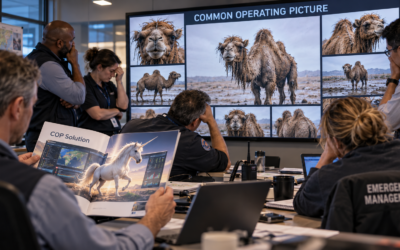
The (Un)Common Operating Picture
The common operating picture (COP) is a familiar concept in emergency management, yet genuinely effective examples seem surprisingly rare. Why is something so widely recognised as essential to situational awareness so difficult to get right?
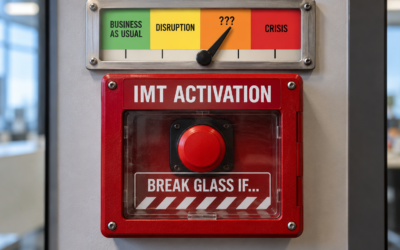
Soooo Triggering: When Should You Activate your IMT?
Knowing when to activate an IMT isn’t always obvious. Good activation criteria provide enough structure to guide decision-making without trying to replace judgement.
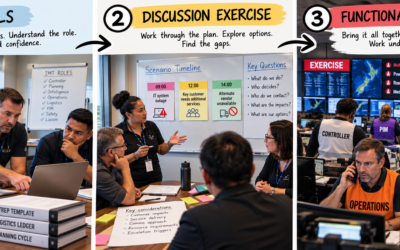
Train Hard, Incident Manage Easy
Incident management capability isn’t built in a single exercise. Start with the skills, practise regularly, then progressively add complexity and pressure. Functional exercises have an important role, but they need to be part of an ongoing training and exercise programme.
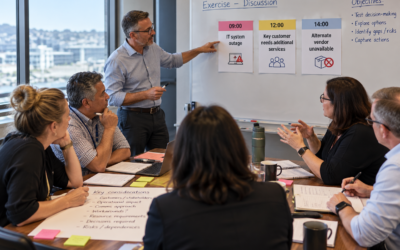
Value of Discussion Exercises
Exercises don’t always need to be complex, expensive simulations. Short, well-designed discussion exercises can give teams regular opportunities to practise decision-making, engage with their plans and build capability; without the cost and effort of a full functional exercise.
’Tis the Season (for Exercises?)
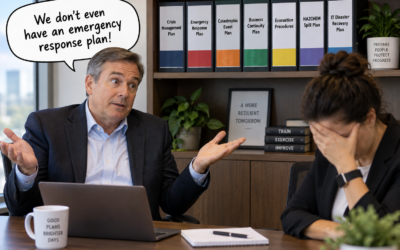
Exercises shouldn’t be designed to catch people out. The right exercise depends on where your team is in its training journey: build confidence and capability in your people, while putting your plans and procedures properly to the test.
Risks are boring. Issues are exciting.
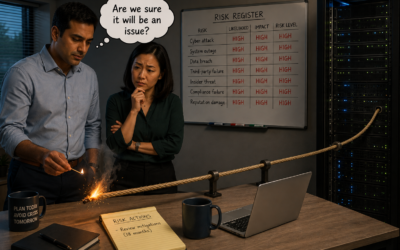
Some people are brilliant at solving problems once they become urgent. But as we move into leadership roles, our risk horizon needs to shift from responding to issues to acting before they happen.
Is Risk Management the Problem?
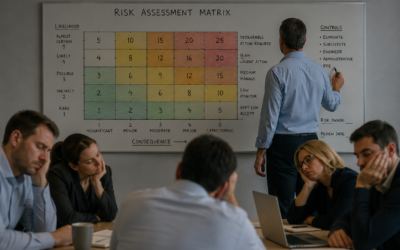
Risk management is often treated as a compliance step rather than a decision-making tool. A different approach can help organisations identify risk earlier and make better-informed decisions.